


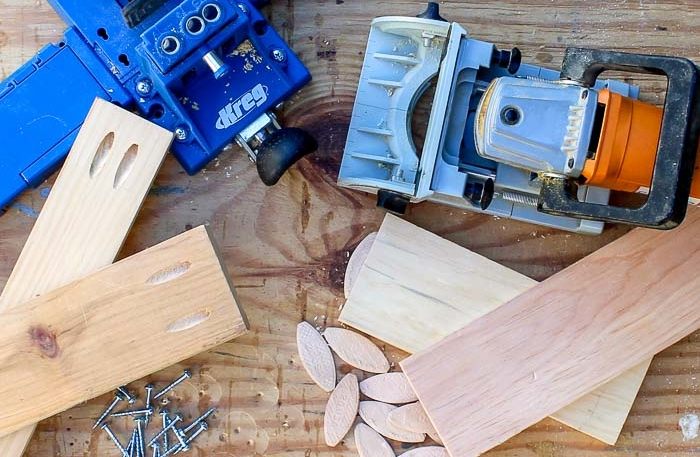
Wood Joinery for Beginners: Pocket Holes, Dowels, and Biscuits Compared
You built the parts correctly but now you need to join them together without complex hand tool joinery. Wood joinery for beginners comes down to three accessible methods that do not require specialty hand skills: pocket holes, dowels, and biscuits. Each one works well for specific applications and fails predictably in others, and choosing the wrong method for the job is what causes joints to open up, panels to shift during glue-up, or face frames to rack after installation.
This guide compares all three methods honestly so a beginner can choose the right joinery for their specific project before drilling the first hole.
What Is the Best Joinery Method for Beginner Woodworkers?
Wood joinery for beginners works best when the method matches the application, the available tools, and the acceptable level of visible hardware in the finished piece. There is no single best method. Pocket holes are fast and require minimal setup. Dowels are strong and hidden but require precise alignment. Biscuits align panels and frames reliably but add minimal mechanical strength on their own.
Understanding what each method actually does, and does not do, makes the choice clear before the project is underway.
Pocket Hole Joinery for Beginners
Pocket hole joinery is the fastest and most beginner-friendly mechanical joining method available for a garage workshop. A specialized jig drills an angled hole into one piece, and a self-tapping pocket screw pulls the two pieces together without clamps, glue, or precise alignment drilling.
What Pocket Holes Do Well
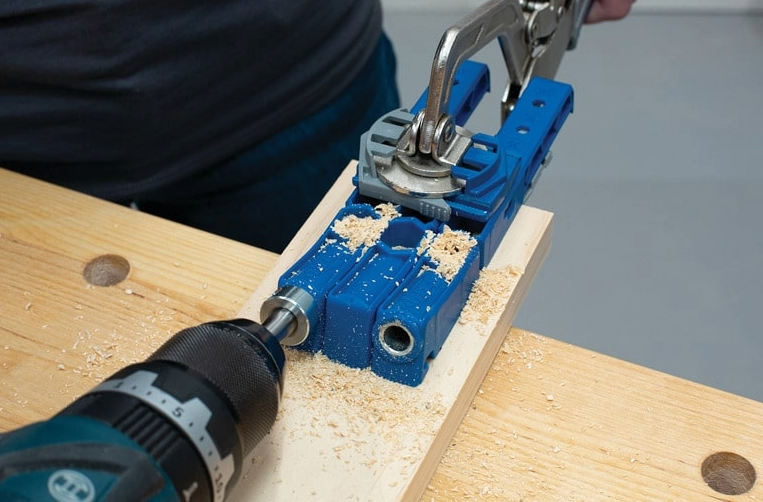
Pocket hole joinery excels in face frame construction, cabinet box assembly, and any application where speed matters more than joint visibility. A pocket screw joint can be drilled and assembled in under two minutes per joint and requires no clamping time beyond what keeps the pieces in position while the screws are driven.
For painted furniture and cabinet interiors where the angled hole will not be seen, pocket hole joinery is the most practical wood joinery option a beginner can use. The joint is strong enough for most furniture applications, and the Kreg jig system, the most common pocket hole system available, produces consistent results with minimal setup.
Where Pocket Holes Fail
Pocket holes are a poor choice for joints that will be visible in the finished piece. The angled hole and plug required to hide it are visible on close inspection, particularly on stained or clear-finished work. Pocket holes also perform poorly in end grain, where the screw has little fiber to grip, and in thin stock under half an inch thick. Wood species affects this too, since softer, lower-density woods hold pocket screws less reliably than hardwoods, which is one more reason choosing the right wood species for a beginner furniture project matters before the first joint is cut.
Long-grain to long-grain edge joints, like joining two boards face-to-face for a thicker glue-up, gain nothing from pocket screws because the mechanical advantage of the angled screw is minimal when the grain orientation is already ideal for glue.
Dowel Joinery for Beginners
Dowel joinery uses round wooden pegs glued into matching holes drilled in both mating pieces. Done correctly, a dowel joint is significantly stronger than a pocket screw joint because the dowel provides both mechanical connection and a large glue surface area inside the joint.
What Dowel Joints Do Well
Dowel joinery is one of the strongest hidden wood joinery methods available to a beginner without a mortise chisel or a biscuit joiner. The joint is completely invisible on the finished piece, which makes it appropriate for natural wood furniture, stained work, and any application where the face of the joint will be visible.
Dowels also provide alignment during assembly, which is useful for edge-joining wide panels where keeping two boards in registration while glue cures is difficult with clamps alone. A row of dowels along a glue joint prevents the boards from sliding out of alignment as clamping pressure is applied.
Where Dowel Joints Fail
The primary challenge with dowel joinery is alignment. Both holes must be drilled in exactly the right position for the dowel to pull the joint into correct alignment rather than forcing it out of square. A doweling jig is essential for repeatable accuracy, since freehand drilling produces holes that are rarely positioned accurately enough for a tight joint.
Wood joinery for beginners using dowels requires more setup time and precision than pocket holes, but the investment pays off in stronger, cleaner joints that work for any finish type.
Choosing Dowel Size
The standard rule for dowel diameter is roughly one third of the thickness of the thinner piece being joined. For three-quarter inch plywood and lumber, a three-eighth inch dowel is appropriate. Dowel length should be slightly shorter than the combined depth of both holes to avoid bottoming out before the joint closes fully.
Biscuit Joinery for Beginners
Biscuit joinery uses a specialized tool, a biscuit joiner or plate joiner, to cut matching slots in both mating pieces. A compressed wood biscuit is glued into one slot, the joint is assembled, and the biscuit swells from the glue moisture to fill the slot.
What Biscuit Joints Do Well
Biscuits are the most reliable alignment tool in wood joinery for beginners working on edge-to-edge panel glue-ups. The biscuit holds two boards in registration during assembly, preventing the slipping that makes large panel glue-ups frustrating to clamp without some form of alignment feature.
Biscuits also work well for joining mitered corners in face frames and carcasses where the biscuit is hidden inside the miter and provides alignment without visible hardware.
Where Biscuit Joints Fail
Biscuits provide minimal mechanical strength compared to dowels or pocket screws. The joint relies almost entirely on glue for strength, with the biscuit functioning mainly as an alignment device. For structural joints that will carry load, biscuits alone are not an adequate replacement for dowels, pocket screws, or traditional joinery.
Biscuit joinery also requires a biscuit joiner, which is a dedicated tool that does one job. For a beginner on a limited tool budget, pocket hole joinery delivers more versatility per dollar since the jig and screws handle a wider range of assembly tasks than a biscuit joiner does.
Comparing All Three Methods Side by Side
The clearest way to choose the right wood joinery method is to match the method to the specific requirement of the joint:
🪚 Speed and painted finish: Pocket holes are the correct choice. Fast setup, no alignment jig required, and hardware is hidden under paint or in an interior cabinet surface.
🪚 Strength and hidden joint on stained work: Dowels are the correct choice. Stronger than pocket screws, invisible on the finished surface, appropriate for any finish type.
🪚 Panel alignment during glue-up: Biscuits are the correct choice. Not for strength, but for keeping wide panels in registration during clamping without complex clamping setups.
Most garage workshop beginners benefit from having a pocket hole jig for case work and face frames and a doweling jig for furniture joints where appearance matters, covering the majority of wood joinery situations without requiring specialty hand tool skills.
Does Glue Always Need to Be Used With These Methods?
Pocket screws do not require glue for structural joints in most furniture applications because the mechanical clamping force of the screw holds the joint under load. Adding glue improves the joint but is not strictly necessary for interior cabinet work and face frames where the joint is not under significant tension.
Dowels require glue because the dowel alone provides minimal mechanical resistance to pulling forces without the bond between the dowel and the surrounding wood fiber. Getting that glue bond right is the difference between a joint that lasts and one that opens under load, which is covered fully in why woodworking glue joints fail and how to fix them.
Biscuits always require glue because the biscuit provides no structural value on its own. The swelling action that locks the biscuit in the slot only occurs when glue moisture activates it, and without glue the biscuit simply sits loose in the slot.
👉 Book a demo today and see how Woodshop Master helps your shop grow without limits.
FAQ: Table Saw Cut Accuracy
Which joinery method is the strongest for furniture?
Of the three beginner methods, dowels produce the strongest joints when correctly drilled and glued because the dowel provides mechanical resistance in multiple directions and has a large glue surface area. Pocket screws are strong enough for most furniture applications and significantly faster to execute, making them the practical choice when appearance requirements allow it.
Can I use pocket holes on plywood?
Yes, pocket holes work well in plywood for cabinet box construction and shelf pin installation. Use coarse-thread pocket screws for plywood rather than fine-thread, since coarse threads grip the plywood laminations more reliably. Avoid driving pocket screws closer than two inches from the edge of a plywood panel to prevent the face veneer from splitting.
Do I need a special drill bit for dowel joinery?
A brad-point drill bit produces a cleaner, more accurate hole for dowels than a standard twist bit. A doweling jig with self-centering guides is essential for aligning holes between two mating pieces accurately. Without a jig, holes drilled freehand are rarely aligned accurately enough to produce a tight joint.
How many biscuits should I use per linear foot of edge joint?
One biscuit every six to eight inches is a practical spacing for face frame and panel alignment work. For long edge glue-ups on tabletops and wide panels, spacing every eight to ten inches keeps the boards in registration without over-slotting the edge. Use the largest biscuit size that fits the material thickness for maximum alignment surface.
Is pocket hole joinery strong enough for a dining table?
Pocket screws are strong enough for the apron-to-leg connections on a dining table, particularly when glue is added. The tabletop attachment using pocket screws or figure-eight fasteners is also a standard technique. For the leg-to-apron joint specifically, many woodworkers use pocket screws with glue for a strong, fast joint that outperforms most traditional alternatives in a beginner workshop. POST: The strongest choice isn’t always the right one. Link in the comments. Linkedin: #WoodworkingTips #FurnitureMaking #WorkshopSkills

