


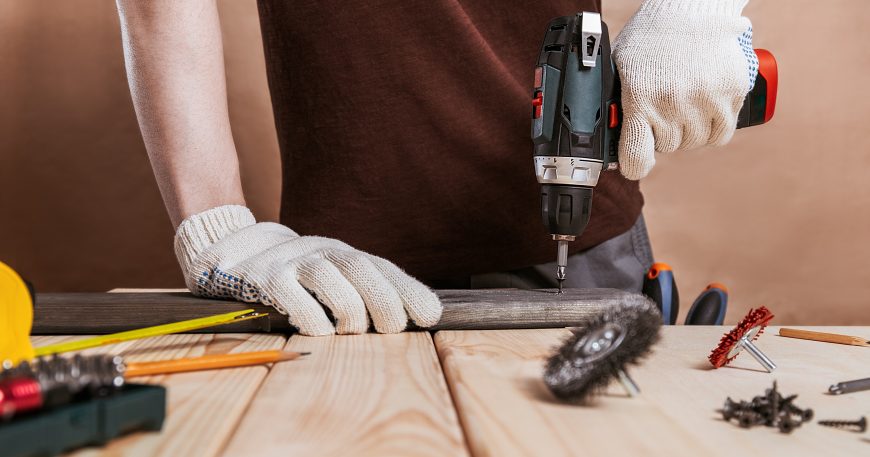
Why Wood Splits When You Drive Screws and How to Stop It
You line up the screw, drive it in, and hear the crack before you even see the damage. A split running along the grain from the screw hole, sometimes all the way to the end of the board. The piece is ruined or needs significant repair before the project can continue.
Wood splitting near screws is one of the most preventable problems in a garage workshop. It does not happen randomly. It follows a clear set of causes that, once understood, make the fix obvious before the first screw goes in.
Why Does Wood Split When You Drive a Screw?
Wood splits near screws because the screw threads act as a wedge, forcing wood fibers apart as the screw advances into the material. When the wood cannot accommodate that force, it cracks along the grain line where the fiber structure is weakest.
The risk is not the same across all situations. Four factors determine whether a screw splits the wood or drives cleanly.
The Screw Is Too Close to the Edge or End
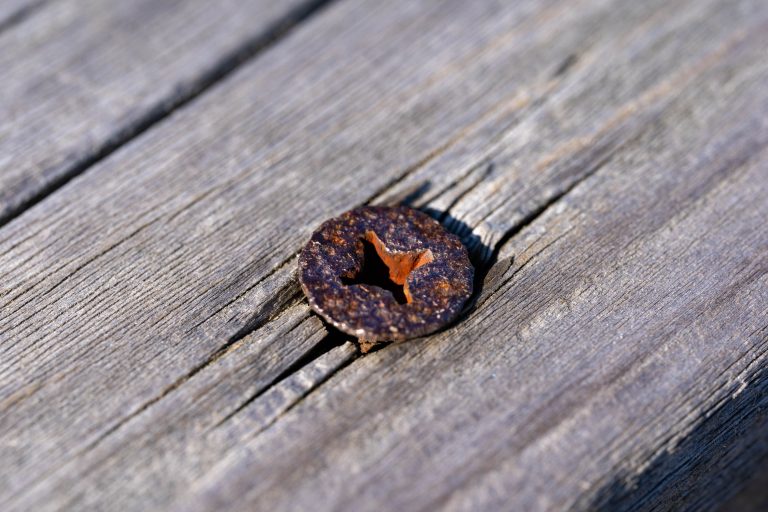
Driving a screw close to the end grain of a board concentrates the wedging force in an area where there is very little wood fiber to resist it. The closer the screw is to the end, the less material is available to absorb the stress, and splitting becomes almost inevitable without a pilot hole.
The standard minimum distance for a screw from the end of a board is at least two and a half times the screw diameter. For a standard number eight wood screw, that is roughly three quarters of an inch from the end. Many beginners drive screws much closer than this, particularly when attaching face frames, cabinet backs, and box corners.
No Pilot Hole Was Drilled
A screw driven without a pilot hole into solid wood near an edge or into end grain displaces wood fibers rather than cutting through them. The displaced fibers have nowhere to go except outward, which generates splitting force along the grain.
A pilot hole sized correctly for the screw shank removes a column of material before the screw enters, giving the threads something to bite into rather than displace. The result is a screw that pulls the joint together rather than splitting it apart.
The Wood Species Is Prone to Splitting
Some species split far more easily than others near screws. Oak, ash, and hard maple have dense, interlocked grain that resists splitting well. Pine, cedar, poplar, and particularly dry or reclaimed hardwoods split much more easily because their fiber structure offers less resistance to the wedging force of the screw.
Thin stock and narrow pieces split more readily than thick or wide stock because there is less material mass to absorb the stress. The same species behavior that causes splitting near screws also determines how plywood veneer responds to blade pressure during cuts. A quarter-inch-thick piece of oak near the edge will split from a screw that would drive cleanly into a one-inch piece of the same species.
The Screw Has Aggressive Thread Geometry
Coarse-thread screws designed for construction framing have aggressive threads that generate significantly more wedging force than fine-thread or specifically designed woodworking screws. Using framing screws for furniture assembly increases splitting risk, particularly near edges and in thin stock.
Purpose-made woodworking screws have a smaller thread diameter relative to the shank, a self-countersinking head, and sometimes a smooth unthreaded shank section below the head that pulls the joint tight without continuing to wedge the upper piece.
How to Stop Wood From Splitting Near Screws
Drill a Pilot Hole Every Time Near Edges and End Grain
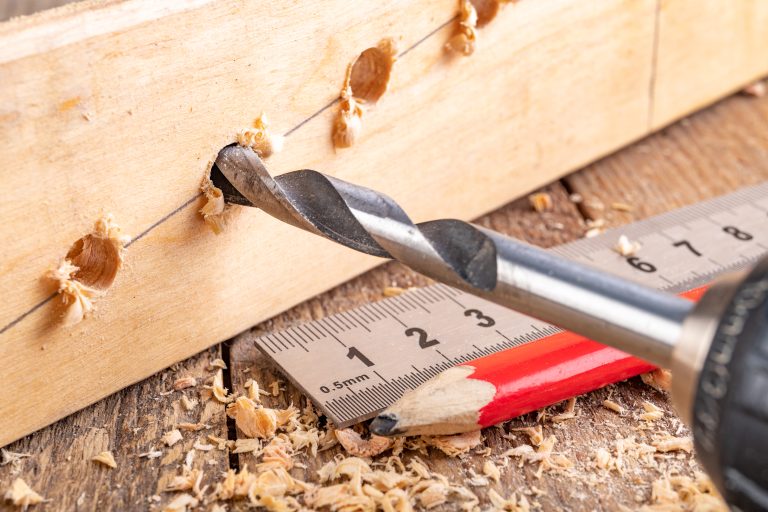
A pilot hole is the single most reliable fix for splitting near screws. The hole should be sized to match the shank diameter of the screw, not the thread diameter. Drilling to the thread diameter leaves too little material for the threads to bite into. Drilling to the shank diameter allows the threads to engage the wood while the shank passes through cleanly.
For most number eight woodworking screws, a pilot hole of three thirty-seconds of an inch in the piece being joined and one eighth of an inch in the piece receiving the screw is a reliable starting point. Testing in scrap from the same board before drilling the actual piece takes less than a minute and confirms the fit, which is one more reason keeping offcuts organized and accessible pays off during assembly.
Use a Countersink Bit for Combined Drilling
A countersink bit drills the pilot hole and the countersink for the screw head in a single pass, which saves time and ensures the screw head sits flush or just below the surface rather than splitting the face grain as it drives home.
Combination countersink and pilot bits are sized specifically for standard screw sizes and are one of the most useful workshop purchases for anyone doing regular furniture work. Driving a screw whose head has nowhere to seat creates a secondary splitting risk at the face of the board that a countersink eliminates.
Lubricate the Screw Before Driving
Rubbing the threads of a wood screw against a block of beeswax or a bar of soap before driving significantly reduces the friction and wedging force generated as the screw enters the wood. This is particularly useful in dry hardwoods, near edges, and in any situation where a pilot hole alone is not enough.
Wax lubrication is a traditional woodworking technique that works on any screw type and adds no visible residue to the joint.
Choose the Right Screw for the Application
For furniture assembly and box construction, use purpose-made woodworking screws rather than construction screws. Woodworking screws have a finer thread pitch, a smoother shank section, and a head geometry designed for flush seating without splitting the face grain.
Self-tapping pocket screws used with pocket hole joinery are designed specifically for driving into end grain at a controlled angle and are a practical solution for face frame and cabinet box assembly where traditional screw placement would create splitting risk.
Does Pre-Drilling Weaken the Joint?
No. A correctly sized pilot hole does not weaken the screw joint. The threads still engage the wood fibers in the receiving piece, and the clamping force generated by the screw head seating against the countersink holds the joint as effectively as a screw driven without a pilot hole. The difference is that the joint holds without cracking the wood in the process.
Oversized pilot holes do reduce holding strength because the threads have nothing to engage. The pilot hole should clear the shank and nothing more.
👉 Book a demo today and see how Woodshop Master helps your shop grow without limits.
FAQ: Table Saw Cut Accuracy
Why does wood split even when I drive the screw slowly?
Driving speed affects heat generation but does not significantly change the wedging force that causes splitting. The fix is a pilot hole sized correctly for the screw shank, not a slower driving speed. Slowing down helps slightly with heat in dense hardwoods but does not prevent splitting on its own.
Can I fix a split board after it happens?
Minor splits that have not broken through the full thickness can sometimes be glued and clamped successfully if done immediately after the split occurs. Apply wood glue into the crack, work it in with a thin card or palette knife, clamp the split closed, and allow full cure time before any further work. Splits that have traveled far along the grain usually require replacing the piece.
What is the best pilot hole size for a number eight screw?
A three thirty-seconds-of-an-inch bit for the pilot in the receiving piece and a one-eighth-inch bit for the clearance hole in the top piece is a reliable starting point for most softwoods and medium hardwoods. Dense hardwoods like hard maple and hickory benefit from a slightly larger pilot, closer to seven sixty-fourths of an inch, to reduce driving resistance and splitting risk.
Does wood moisture content affect splitting near screws?
Yes. Very dry wood splits more easily than wood at normal moisture content because the fibers are more brittle and less able to deform around the screw thread. Lumber stored in a dry garage over winter can become significantly more prone to splitting than the same species would be at normal shop humidity.
Should I always use a countersink even on hidden joints?
On visible faces and any joint where the screw head could split the face grain, yes. On hidden structural joints where appearance is not a concern and the screw head seats cleanly against a flat surface, a full countersink is less critical. A pilot hole is still recommended regardless of whether a countersink is used.

