


Why Your Table Saw Cuts Are Not Straight and How to Fix It
You lock the fence, push the board through, and the cut still wanders. Or the piece comes out slightly tapered when it should be perfectly parallel. Or the blade binds halfway through the cut and the wood scorches along the kerf.
A table saw that does not cut straight is not just frustrating. It makes every subsequent step in the project harder because nothing fits the way it should. The good news is that inaccurate table saw cuts almost always trace back to one of four specific causes, and each one has a practical fix that works in a garage workshop without specialty tools.
Why Are My Table Saw Cuts Not Straight?
Inaccurate table saw cuts come from misalignment between the blade, the fence, and the miter slot. When these three elements are not parallel to each other, the wood binds, drifts, or cuts at an angle regardless of how carefully you feed the material.
The four main causes account for nearly every accuracy problem in a home workshop table saw.
The Fence Is Not Parallel to the Blade
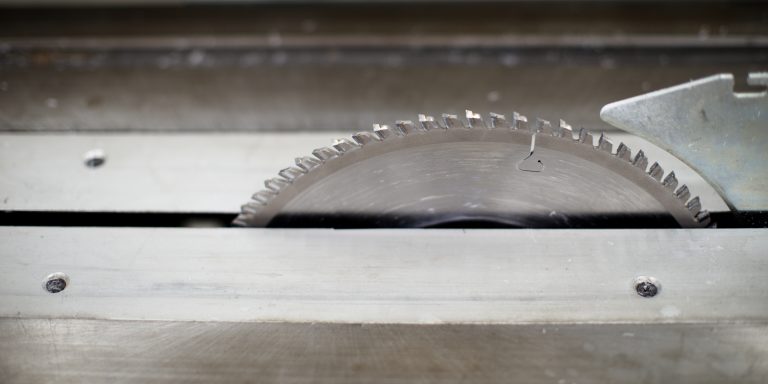
This is the most common cause of inaccurate cuts and the first thing to check. When the fence is not parallel to the blade, the wood is squeezed between the fence and the blade as it passes through, causing it to bind, burn, or drift away from the fence at the end of the cut.
A fence that is slightly toe-out (the back of the fence angled slightly away from the blade) is safer than one that toes in, but even a small toe-out produces cuts that are not perfectly parallel. For furniture work where joint accuracy matters, the fence needs to be parallel to the blade within a few thousandths of an inch.
Most contractor and cabinet saws have adjustment screws on the fence rail that allow the fence to be repositioned. Checking fence alignment with a reliable square or by measuring from the blade to the fence at the front and back teeth is a quick diagnostic that takes less than five minutes.
The Blade Is Not Parallel to the Miter Slot
If the blade is not parallel to the miter slot, nothing that rides in the miter slot (the miter gauge, crosscut sled, or featherboard) will produce accurate results. This misalignment is less common than fence problems but more difficult to correct because it involves adjusting the trunnion that holds the saw arbor.
On most contractor saws, the trunnion can be adjusted by loosening mounting bolts and shifting the position of the saw table or the motor assembly depending on the design. On cabinet saws, the adjustment is typically at the trunnion itself. The process varies by saw model but the diagnostic is the same: measuring the distance from a single blade tooth to the miter slot at the front and back of the blade while the blade is rotated to bring the same tooth to each position.
The Blade Has Runout or Wobble
A blade that wobbles as it spins cuts a kerf that is wider than the blade thickness and leaves a wavy cut surface. The most common causes are a bent blade, debris on the arbor flange, or a damaged arbor.
Checking for runout requires a dial indicator held against the blade face while the blade is rotated by hand with the saw unplugged. A reliable blade should have less than 0.005 inches of runout. More than that produces visible cut quality problems on hardwood and plywood.
Before suspecting a bent blade, clean the arbor flange thoroughly. Sawdust and pitch buildup on the flange face pushes the blade out of alignment and is a common cause of runout that gets misdiagnosed as a bent blade.
The Fence Moves During the Cut
A fence that feels locked but shifts slightly under cutting pressure is a problem common to older or lower-quality table saws. Even a small amount of fence movement during a long rip cut produces a tapered piece that is wider at one end than the other.
Testing for fence movement is simple. Lock the fence, place moderate hand pressure against it in the direction the wood would push, and watch for any movement. If the fence shifts even slightly, the locking mechanism needs adjustment or repair before accurate work is possible.
How to Fix Inaccurate Table Saw Cuts
Check and Adjust Fence Alignment First
Before adjusting anything on the saw itself, verify that the fence is the source of the problem. Measure from the blade to the fence at the front tooth and the back tooth of the blade. Use a reliable combination square or a purpose-made alignment tool.
If the measurements differ, adjust the fence according to the manufacturer’s instructions for your specific saw model. Most fences have adjustment screws or set bolts at the head of the fence that change the angle of the fence relative to the rail.
After adjustment, recheck the measurement and make a test cut in scrap material. A straight, clean cut with no burning and no tendency to drift confirms the fence is correctly set.
Align the Blade to the Miter Slot
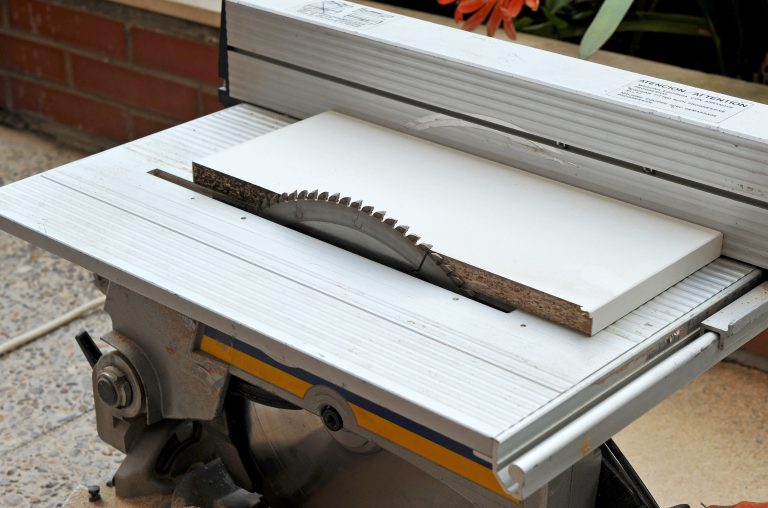
This adjustment is the most important calibration step on any table saw and should be checked when the saw is new, after moving the saw, and any time cut quality degrades unexpectedly.
Mark a single tooth on the blade with a permanent marker. Raise the blade to full height. Measure the distance from that tooth to the miter slot at the front of the blade, then rotate the blade by hand until the marked tooth is at the back, and measure again.
Both measurements should be identical. If they differ, the trunnion needs adjustment. The specific process depends on your saw model. Consulting the owner’s manual for the adjustment procedure is the most reliable starting point before attempting any trunnion work.
Inspect and Clean the Arbor Before Replacing a Blade
If runout is the problem, clean the arbor flange with mineral spirits and a clean rag before assuming the blade is damaged. Remove the blade, wipe both faces of the flange and the blade bore clean, reinstall, and recheck runout.
If runout persists after cleaning, test with a known-good blade before replacing parts. A blade that runs true on another saw confirms the problem is in the arbor, not the blade.
Check the Fence Lock Mechanism
If the fence shifts under pressure, inspect the locking cam or lever mechanism for wear. On many contractor saws, the fence locks by clamping against the front rail. Over time the clamping surface wears and the holding force diminishes.
Some fences can be adjusted by tightening a set screw that controls the clamping tension. Others require replacement of worn parts. An aftermarket fence system is a practical upgrade for a contractor saw that has developed persistent fence movement problems and is used regularly for furniture work.
Does Blade Quality Affect Cut Straightness?
Yes, but less than alignment in most cases. A high-quality blade on a misaligned saw still produces inaccurate cuts. Blade selection matters for specific materials too, and that starts with understanding how blade tooth count affects cut quality on plywood. A quality blade on a properly aligned saw produces clean, straight cuts consistently.
Where blade quality matters most for straightness is in blade stiffness. Thin-kerf blades flex more under cutting load than full-kerf blades, which can cause slight deflection in long rip cuts through dense hardwood. For a contractor saw doing regular furniture work in hardwood, a quality full-kerf 40-tooth combination blade or a 24-tooth ripping blade for long rips is a more reliable choice than a thin-kerf blade pushed beyond its design limits.
What to Check When the Saw Was Cutting Fine Before
If the saw was producing accurate cuts and accuracy degraded over time, the most common causes are fence wear, pitch buildup on the blade or arbor, or the saw being moved and shifted out of alignment.
Start with cleaning. Remove the blade and clean the arbor flange, the blade, and the fence rail contact surfaces. Keeping maintenance supplies and cleaning tools accessible in the shop makes this kind of quick check a habit rather than a chore, which is why having tools where you can find them matters as much as the maintenance itself. Reinstall and recheck alignment before adjusting anything mechanical. Pitch and sawdust buildup on contact surfaces is responsible for more accuracy problems than actual mechanical wear in most garage workshop table saws.
👉 Book a demo today and see how Woodshop Master helps your shop grow without limits.
FAQ: Table Saw Cut Accuracy
Why does my table saw cut burn the wood along the cut line?
Burning almost always means the fence is toed in slightly, causing the wood to pinch against the blade as it exits the cut. It can also indicate a dull blade or a blade with too many teeth for ripping solid wood. Check fence alignment first, then evaluate blade condition.
Why does my board drift away from the fence during a rip cut?
Drifting means the fence is not parallel to the blade, the blade has significant runout, or the wood itself has internal tension that releases during cutting. Check fence alignment and blade runout before assuming the wood is the problem.
How often should I check table saw alignment?
Check blade-to-miter-slot alignment when the saw is new, after any move, and any time cut quality changes. Check fence alignment at the start of any project where cut accuracy matters. A five-minute check before a furniture project is faster than remaking parts that came out wrong.
Can a warped blade cause inaccurate cuts?
Yes. A visibly warped blade should be replaced immediately. A blade with subtle runout shows up as a wavy cut surface and wider-than-expected kerfs. Test runout with a dial indicator and replace any blade that exceeds 0.005 inches of runout.
Why does my table saw cut taper from one end to the other?
A tapered cut almost always means the fence moved during the cut or the fence is not parallel to the blade along its full length. Test fence movement under hand pressure and recheck parallelism along the full length of the fence, not just at the front.

