


Why Wood Warps After Assembly and What You Can Do About It
The project looked perfect when you finished it. Flat panels, tight joints, square corners. You left it in the garage overnight and came back to find one side lifting off the bench, a panel cupping across its width, or a door that no longer sits flush in its frame.
Wood warping after assembly is one of the most discouraging problems in a garage workshop because the work was done correctly and the result still failed. Understanding why wood moves after a project is built, and what controls that movement, changes how you select, prepare, and assemble material from the first cut forward.
Why Does Wood Warp After a Project Is Built?
Wood warps after assembly because it continues to exchange moisture with the surrounding air, and that moisture exchange causes wood fibers to expand or contract unevenly across the width, thickness, or length of a board. When different faces or sections of a board gain or lose moisture at different rates, the board distorts to relieve the resulting stress.
The assembly being complete does not stop wood movement. It redirects it. Joints, fasteners, and glue resist movement in some directions while the wood finds other ways to express the dimensional change.
Wood Was Not Acclimated Before Building
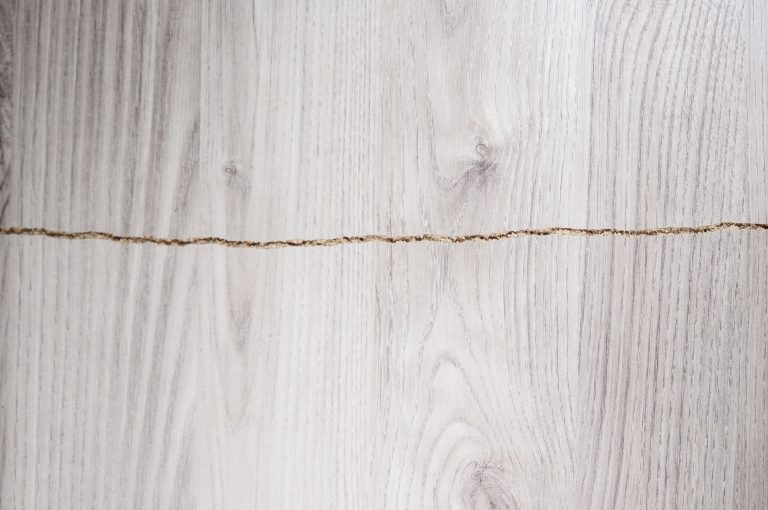
This is the most common cause of post-assembly warping in garage workshops. Lumber purchased from a home center or lumber yard has been stored in conditions that may be very different from your shop environment. When that lumber moves into your garage and then into a finished project without time to acclimate, it carries moisture content that does not match the shop environment.
Wood should acclimate in the shop environment for a minimum of five to seven days before cutting begins, and longer is better for wide panels and thick stock. During acclimation, the wood reaches equilibrium moisture content with the surrounding air. Material cut and assembled before that equilibrium is reached will continue moving after the project is complete.
A garage workshop with no climate control experiences significant humidity swings between seasons. Wood acclimated during a humid summer and then used in a project that lives in a climate-controlled interior will continue drying and shrinking after delivery, which causes panels to cup, joints to open, and drawers to stick or rattle depending on the season.
Grain Orientation Was Not Considered During Glue-Up
When gluing up panels from multiple boards, the orientation of the annual rings in each board affects how the panel moves as a unit. Boards with rings oriented in alternating directions across the panel width tend to cancel each other’s movement and stay flatter over time.
Boards glued up with rings all oriented the same direction amplify each other’s movement tendency and cup more aggressively as moisture content changes. For tabletops, cabinet panels, and any wide glue-up, alternating ring orientation is the most practical step for reducing post-assembly cupping.
This does not require reading annual rings on every board. In flat-sawn lumber, the wider face of the board is the face side and the growth rings run roughly parallel to that face. Alternating which face points up across the glue-up is a reasonable approximation of alternating ring orientation for most garage workshop applications.
One Face Was Finished and the Other Was Not
A finish coat on one face of a panel slows moisture exchange through that face significantly. If only one face is finished, the unfinished face continues exchanging moisture freely while the finished face does not. The two faces then respond differently to humidity changes, and the panel cups toward the unfinished face.
This is a common cause of warping in cabinet doors, drawer faces, and tabletops where the back or underside is left unfinished to save time. Applying at least a sealer coat to all surfaces, including the hidden ones, balances moisture exchange across the panel and significantly reduces cupping tendency.
The Wood Had Internal Stress Before Cutting
Lumber that looks flat on the shelf sometimes has internal stress from the way the tree grew or the way the board was dried. When a board with internal stress is ripped or resawn, the stress releases and the piece moves immediately or over the following hours as the freshly cut surfaces adjust.
This is why a board that was flat before cutting sometimes cups or bows after being ripped to width on the table saw. The cut releases tension on one side of the board that was held in balance by the removed material.
Identifying internally stressed lumber before building is difficult without cutting it. The most practical approach is to rough cut material slightly oversized, stack it flat in the shop for a day or two, and then make finish cuts to final dimension. Any movement that was going to happen after rough cutting happens before final dimensioning rather than after assembly.
How to Prevent Wood Warping After Assembly
Acclimate All Lumber Before Any Cutting Begins
Stack lumber flat in the shop with stickers (thin strips of wood) between each layer to allow air circulation on all faces. Leave it for at least five to seven days, longer for stock over two inches thick or panels wider than twelve inches.
Do not acclimate lumber leaning against a wall or standing on end. Uneven air exposure on different faces during acclimation causes the board to move unevenly before cutting even begins.
Control Moisture Content With a Moisture Meter
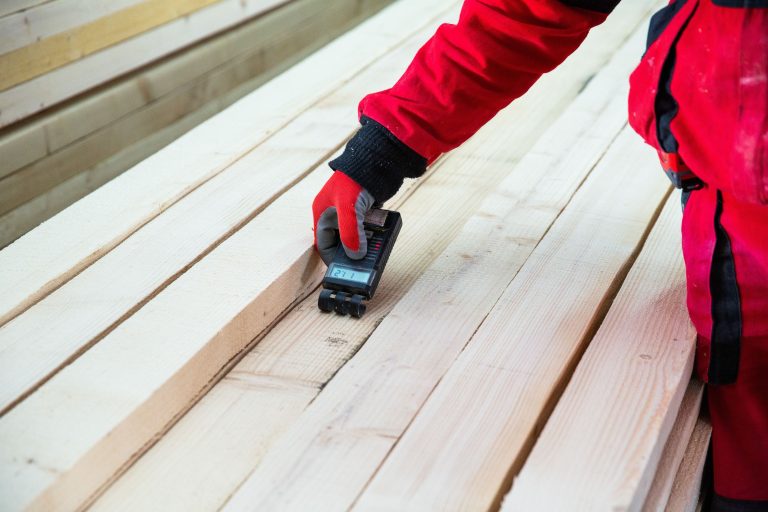
A basic pin-type moisture meter is one of the most useful tools in a garage workshop for preventing warping problems. For interior furniture in a climate-controlled environment, target moisture content is typically six to eight percent. For projects that will live in a garage or outdoor space, target moisture content should match the expected conditions of the finished project location.
Checking moisture content before cutting takes thirty seconds per board and identifies problem material before it becomes a problem project. Lumber above ten percent moisture content for interior furniture is a reliable predictor of post-assembly movement.
Apply Finish to All Surfaces
Before final assembly, apply at least one coat of sealer or finish to all faces, including the back panels, drawer bottoms, and interior surfaces that will never be seen. This does not require the same number of coats as the show faces, but it needs to cover the wood adequately to slow moisture exchange.
Finishing all surfaces is the single most effective step for reducing post-assembly warping in panels and doors and adds only a small amount of time to the finishing process.
Design Joints That Allow Movement
Wide solid wood panels need to move. A tabletop glued rigidly to a base will crack or cause the base to rack as the top expands and contracts seasonally. Tabletop clips, figure-eight fasteners, and elongated slot attachments allow the top to move while staying secured to the base.
The same principle applies to solid wood panels in frames. A raised panel in a door frame needs a gap at the edges to expand without splitting. Building in the correct clearance based on wood species and expected humidity range is part of designing for wood movement rather than fighting against it.
Can Warped Wood Be Fixed After Assembly?
Sometimes, depending on the severity and the type of warp. A cupped board that has not been glued into a panel can often be flattened by wetting the concave face and placing it concave-side-down on a flat surface in a warm environment for several hours, then clamping it flat while it dries.
A twisted board is more difficult to flatten than a cupped board and usually requires jointing or hand planing to remove the twist rather than moisture-based correction.
An assembled panel or door that has warped after finishing is the most difficult situation. If the warp is minor, additional finish coats on the concave face can sometimes draw the panel back toward flat by slowing moisture exchange on that face. Significant warping in a glued-up panel usually requires disassembly, flattening, and reassembly, which is a significant amount of rework.
Prevention is far more time-efficient than correction in every case.
Does Wood Species Affect Warping Tendency?
Yes, significantly. Quartersawn lumber warps less than flat-sawn lumber from the same species because the growth rings run perpendicular to the face rather than parallel, which reduces the differential movement across the width of the board as moisture content changes.
Among flat-sawn species commonly available at home centers, oak and ash are relatively stable compared to pine and poplar, which move more aggressively with humidity changes. Cherry and walnut fall in the middle range and are considered reasonably stable for furniture applications.
MDF and plywood are significantly more dimensionally stable than solid wood because their construction distributes wood fibers in multiple directions simultaneously. For shop cabinets, drawer bottoms, and any application where dimensional stability matters more than solid wood appearance, these materials are the practical choice.
👉 Book a demo today and see how Woodshop Master helps your shop grow without limits.
FAQ: Table Saw Cut Accuracy
How long should wood acclimate before building furniture?
A minimum of five to seven days in the shop environment is the standard recommendation for most lumber under two inches thick. Thicker stock and wide panels benefit from two weeks or more. The goal is for the moisture content of the wood to reach equilibrium with the ambient humidity of the shop before any cutting begins.
Why did my tabletop warp even though I used dry lumber?
Dry lumber can still warp if only one face is finished, if the top is attached rigidly without allowing for movement, or if the shop environment is significantly different from where the finished piece will live. Check whether finish was applied to the underside of the top and whether the attachment method allows seasonal movement.
Can I use a clamp to flatten a warped panel?
Clamping a warped panel flat without addressing the moisture cause of the warp is temporary. The wood will return to the warped position as soon as the clamp is removed unless the moisture differential driving the warp has been corrected. Wetting the concave face and clamping flat while it dries is more effective than clamping alone.
Does sealing wood prevent all warping?
No. A finish coat slows moisture exchange but does not stop it completely. Wood in a sealed and finished project still moves with significant humidity changes over time, just more slowly and with less total movement than unfinished wood. Designing joints and attachments that accommodate movement is necessary in addition to finishing all surfaces.
Why does my lumber warp right after I rip it on the table saw?
Ripping releases internal stress that was held in balance by the full width of the board. Lumber with internal drying stress from the kiln or from uneven growth often shows this behavior. Rough cutting slightly oversized and allowing pieces to rest for a day before final dimensioning allows stress to release before the final cut rather than after assembly.

