


How to Reduce Dust in a Garage Workshop Without a Full Dust Collection System
Dust in a garage workshop is not just a cleanliness problem. It is a health problem and a finishing problem. Fine wood dust particles stay airborne for hours after cutting stops, settle into wet finishes, and accumulate in lungs over years of weekend work. Solving it without a dedicated dust collection system is possible with a combination of tool-level capture, air filtration, and workflow habits that reduce dust generation at the source.
Â
Why Is Dust So Bad in a Garage Workshop?
Garage workshops produce more airborne dust than most woodworkers realize because garages have almost no air exchange and the tools run in a confined space. Unlike a commercial shop with dedicated dust collection infrastructure and makeup air systems, a one or two-car garage traps dust until it settles or is mechanically removed.
The problem compounds because garage workshops typically run intermittently. Dust settles between sessions, then gets disturbed and becomes airborne again when tools run, doors open, or material gets moved across the floor.
Which Tools Produce the Most Dust
Not all tools generate the same dust volume or the same particle size. Understanding which tools are the biggest contributors helps prioritize where to focus dust reduction effort first.
Sanders produce the finest and most dangerous dust. Random orbital and belt sanders generate particles small enough to stay airborne for hours and penetrate deep into the lungs. Finishing sanding on hardwoods like walnut and cherry produces particularly fine dust with documented health risks.
Table saws and miter saws produce large chips and coarse dust that fall quickly, but also generate fine particles from the blade exit side that become airborne immediately.
Routers produce fine dust in large volumes, especially when running profiles across the full length of a board.
Hand planing and chiseling produce shavings and chips that are easier to manage than power tool dust but still contribute to floor accumulation.
How to Reduce Dust Without a Full Dust Collection System
Connect a Shop Vac to Every Tool That Allows It
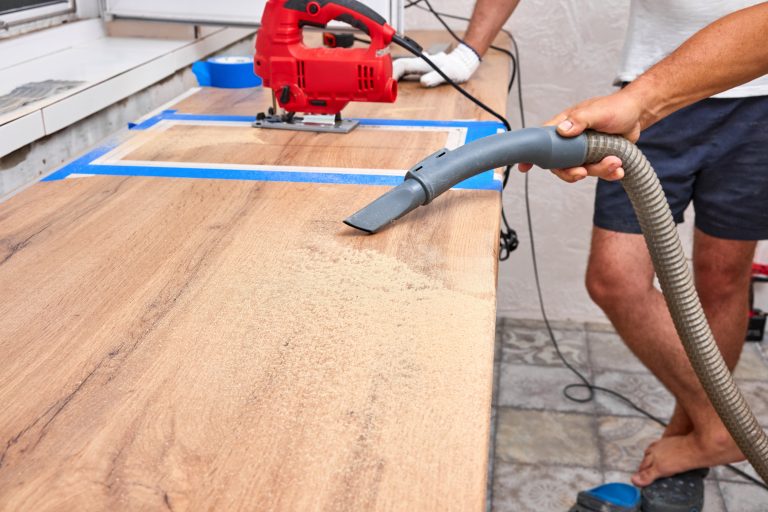
A shop vac connected directly to a sanding tool or router captures dust at the source before it enters the air, which is far more effective than trying to filter it out after it has spread through the shop.
Most random orbital sanders, belt sanders, and many routers have a dust port that accepts a standard shop vac hose directly or with a small adapter. Running the shop vac while the tool runs captures sixty to eighty percent of the dust generated at that tool, depending on the fit of the connection and the cfm capacity of the vac.
For table saws and miter saws, direct connection is less effective because the blade generates dust in multiple directions simultaneously. A shop vac connected to the blade guard dust port captures some of the material but misses a significant portion. An enclosure or shroud around the blade area improves capture significantly on miter saws. On the table saw, a connection below the table in the blade housing is more effective than a guard-mounted port alone.
Use a Dust Separator Before the Shop Vac
A dust separator (also called a cyclone separator) connects between the tool and the shop vac and removes the bulk of the chips and coarse dust before it reaches the shop vac filter. This prevents the shop vac filter from clogging quickly and maintains suction throughout the session.
A basic two-stage separator costs less than thirty dollars and extends shop vac filter life significantly while improving overall suction performance. For a garage workshop running a shop vac as the primary dust management tool, this is one of the highest-value purchases available at any budget level.
Add an Ambient Air Filtration Unit
A shop vac captures dust at the source but does nothing about the fine particles already suspended in the shop air. An ambient air filtration unit hangs from the ceiling or a wall bracket and continuously cycles shop air through a filter, removing fine particles over time.
A ceiling-mounted unit with a one-micron or finer filter running during and after a work session significantly reduces the fine particle load in the air. In a one-car garage, a unit rated for 400 to 650 cfm is sufficient to cycle the air volume several times per hour.
For woodworkers not ready to invest in a dedicated unit, a box fan with a furnace filter taped to the intake face is a low-cost alternative that captures some fine dust. It is less effective than a purpose-built filtration unit but meaningfully better than no filtration at all.
Seal the Concrete Floor
Bare concrete floors in garage workshops are a significant dust contributor because they are porous and hold fine dust that gets disturbed and becomes airborne repeatedly. A sealed floor is one of several improvements that work together with a well-organized garage workshop layout to make the space cleaner and more functional overall. A sealed or painted concrete floor reduces this problem by creating a non-porous surface that can be swept or vacuumed cleanly.
Concrete floor paint or epoxy coating applied to a clean, dry surface seals the pores and makes the floor significantly easier to keep clean. This is a one-time improvement that reduces ambient dust load in every subsequent work session.
Manage the Shop Vac Filter Correctly
A clogged shop vac filter dramatically reduces suction and causes the vac to blow fine dust back into the air from the exhaust. Cleaning or replacing the filter regularly is one of the simplest ways to maintain dust capture effectiveness. Keeping spare filters and maintenance supplies in a known location in the shop is part of the same habit that stops losing time looking for tools and parts at the start of every session.
For regular woodworking use, shaking out the filter at the start of each session and replacing it every few months maintains consistent suction. A pleated filter with a fine micron rating captures more fine dust than a standard foam filter and is worth the small additional cost for a workshop used weekly.
Does a Dust Mask Actually Help in a Garage Workshop?
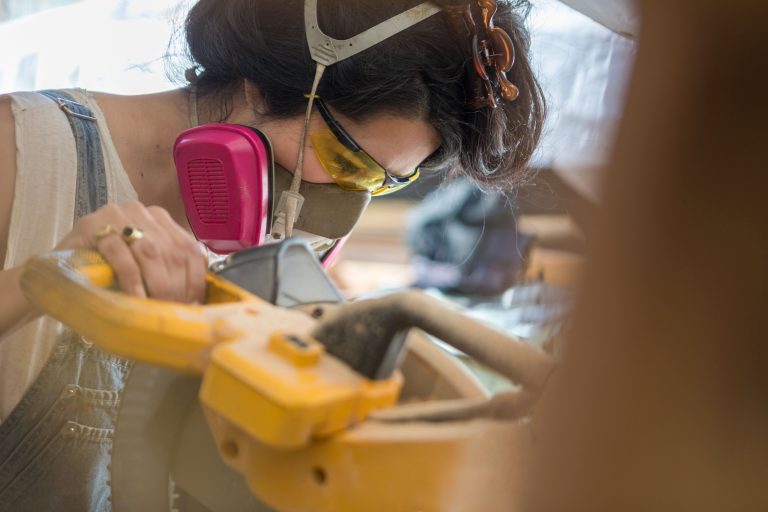
Yes, but the type of mask matters significantly. A standard paper dust mask (N95 rating) provides meaningful protection against fine wood dust when worn correctly and replaced regularly. It is the minimum recommended protection for any power sanding or routing session.
A half-face respirator with P100 particulate filters provides better protection and is more comfortable for longer sessions because it seals more reliably against the face and maintains filtration effectiveness longer than disposable masks.
A full-face powered air purifying respirator (PAPR) is the most effective option for woodworkers who do significant finishing work with solvents in addition to wood dust exposure, but it is a significant investment most hobbyist woodworkers do not need.
The most important habit is wearing respiratory protection from the first cut of the session, not after the shop is already full of dust. Fine particles generated in the first few minutes of cutting stay airborne for the entire session.
What About Dust From Finishing Products?
Finishing products including oil-based stains, varnishes, and lacquers generate solvent vapors in addition to any particulate from sanding between coats. A particulate mask does not protect against solvent vapors. A respirator rated for organic vapor filtration is required when working with solvent-based finishes in a confined space like a garage.
Opening the garage door fully during finishing work and running a fan to move air out of the shop rather than circulating it reduces vapor concentration significantly. Solvent-based finishes in a sealed garage with no air movement create a health hazard and a fire risk that no filtration unit addresses adequately.
A Practical Dust Reduction Setup for Any Budget
For a garage workshop at any investment level, these three items in combination produce a meaningful improvement in dust levels:
A shop vac with a dust separator connected to sanders and routers during use
A ceiling or wall-mounted ambient air filtration unit running during and after work sessions
An N95 or better respirator worn from the start of every power tool session
This combination addresses dust at the source, removes what escapes into the air, and protects the woodworker from what remains. It does not require a dedicated dust collection system, a new tool, or significant structural changes to the shop.
👉 Book a demo today and see how Woodshop Master helps your shop grow without limits.
FAQ: Workshop Dust Reduction
Is wood dust actually dangerous or just messy?
Wood dust is classified as a respiratory hazard. Fine particles from sanding and routing penetrate deep into the lungs and cause cumulative damage over years of exposure. Hardwoods like walnut, cherry, and oak produce dust with documented health risks. Softwoods like pine and cedar also produce irritating dust. Respiratory protection is not optional for regular woodworking.
Can I use a regular household vacuum instead of a shop vac?
Household vacuums are not designed for fine wood dust and typically exhaust fine particles back into the air through the motor and filter system. A shop vac with a fine dust filter is the minimum appropriate tool for wood dust management. A household vacuum can damage the motor and worsen air quality simultaneously.
How long does fine wood dust stay airborne after cutting stops?
Fine particles from sanding and routing can stay suspended in still air for two to four hours after the tool stops running. This is why running an ambient air filtration unit after the work session ends is as important as running it during cutting. Leaving the filtration unit running for an hour after finishing work significantly reduces the settled dust load for the next session.
Does dust affect wood finishing?
Yes, significantly. Fine dust that settles on a wet finish coat causes surface defects that require sanding and recoating. Finishing in a shop with poor dust management consistently produces worse results than the same finish applied in a clean environment. Reducing airborne dust before finishing is as important as applying the finish correctly.
What is the difference between a dust collector and a shop vac for woodworking?
A dust collector moves higher air volume (measured in cfm) at lower static pressure, making it more effective at capturing dust from tools like table saws and planers that generate large volumes of material. A shop vac moves lower air volume at higher static pressure, making it more effective for direct connection to smaller tools like sanders and routers. For a garage workshop without a dedicated dust collector, a shop vac with a separator handles most tool connections adequately.


