
In older shops, the main bench wasn’t just a surface. It belonged to someone.
You could tell who worked there by looking at it: The way the chisels were laid out.The pencil marks on the wall.The dents in the front edge from too many clamps and too many late-night glue-ups.
The bench was a quiet agreement:
“This is my spot. I’m responsible for what happens here.”
Modern shops are busier and more shared, but the idea still matters.
When nobody “owns” anything, everything becomes everyone’s problem and nobody’s priority. When one person owns a station, even if the whole shop uses it, there’s a better chance it stays workable, tuned, and ready for real work.
Old shops weren’t laid out by software. They were laid out by feet.
Things went where they made sense: The bench near the light.The rack near the saw.The sharpening station where you could step aside without getting run over.
Nobody talked about “flow” or “lean.” They just paid attention to their tired legs and sore backs and moved things until the day felt a little easier.
Modern shops can get more complicated, more machines, more people, more types of jobs, but that simple idea is still the best starting point:Can I move from cut to assembly without carrying parts across the world?Do I walk past the same obstacle ten times a day for no good reason?Does this bench actually belong next to this machine, or is it just “where it landed” three years ago?
Your first workbench might look primitive now, but it was probably placed where it made sense in the rhythm of the work. That’s still worth copying.
Work Triangles are essential to work through your shop layouts.
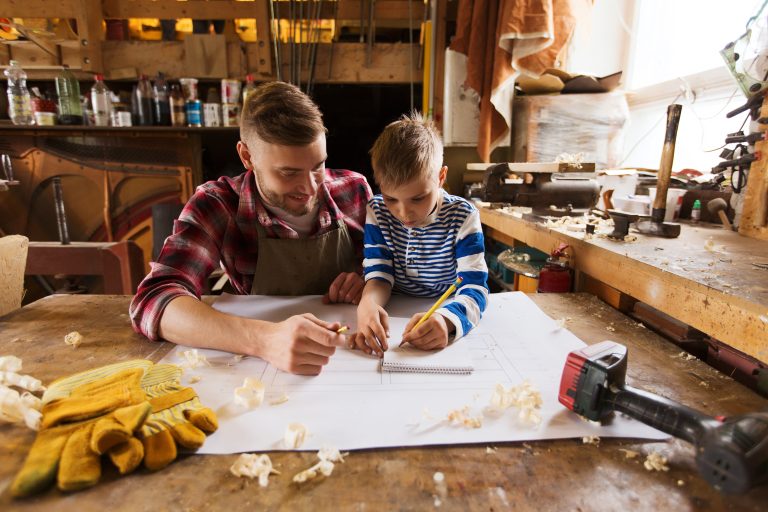
In a lot of older shops, tools had a strange mix of abuse and care.
On one hand, they got used hard:
Dust everywhere, finish drips on the handles, the same clamp doing the job of three different sizes.
On the other hand, there were quiet rules everyone knew:You didn’t put a chisel back dull.You didn’t leave the plane on its blade.You didn’t walk away from the bench with someone else’s tape measure in your pocket.
No signs on the wall, no long policy documents. Just a shared understanding that tools cost money and time, and that treating them like trash hurt everyone.
Today’s tools are more complex, CNCs, edgebanders, fancy cordless everything. But the lesson from that first bench is the same: if everybody respects the tools, the shop can afford to keep getting better ones.
If nobody respects them, it doesn’t matter how “modern” your equipment is. You’ll always be one breakdown away from chaos.
When you think back to your first workbench, you probably don’t remember the exact dimensions or species of wood.
You remember:How it felt to put your hands on something solid.How it sounded when you dropped a clamp on it.How many mistakes it quietly watched you fix.
Old shops weren’t perfect. They wasted material. They guessed on prices. They lost track of time. But they also kept something important at the center: a human being, working with real tools, trying to get a little better every day.
Modern woodshops have more moving parts, more jobs, more deadlines, more numbers to watch. Software, screens, and dashboards are part of the picture now. But they should work the same way that first bench did:Stable. Always there when you need it.Simple. Easy to understand even on a bad day.Supportive. Helping you do better work, not getting in the way.
That’s really what Woodshop Master is trying to protect: not the “old way” just for nostalgia, but that feeling of having a solid bench under your hands while the rest of the shop runs a little smoother around you.

