



The first mindset shift is simple:
Some offcuts are material. Some are trash.
They are not the same thing.
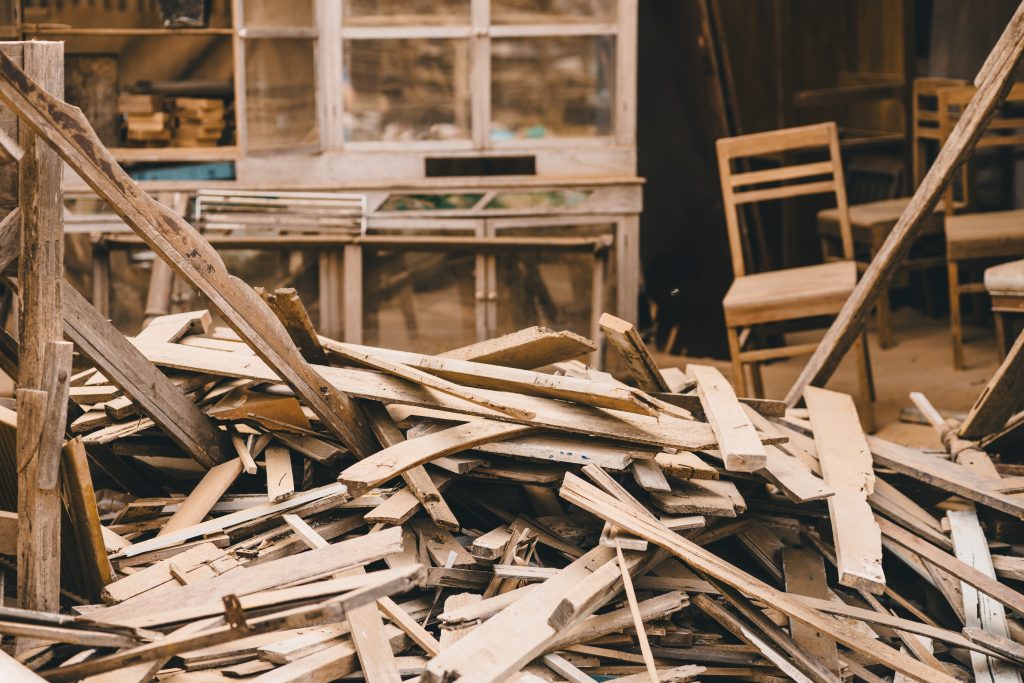
A few easy “throw it out” rules: Twisted, badly cupped, cracked pieces – trash. If you’d be embarrassed to build with it, don’t store it.Strips thinner than you ever use – trash. Be honest about your work; if you never glue up ½” strips, stop keeping them.Weird, super-short chunks that can’t be safely clamped, milled, or cut – trash.
Then decide what is worth keeping:
You might choose: Solid wood longer than, say, 18″ and wider than 1½”Sheet goods bigger than 12″ x 24″Expensive species (walnut, white oak, etc.) with a slightly looser rule than cheap construction stock
Write those rules down somewhere visible.
Once everyone knows the rules, the pile starts shrinking on its own.
Most shops try to sort offcuts by species or thickness only:Maple here, oak there, plywood over there.
That sounds organized, but when you’re in a hurry and just need a piece for a jig, a spacer, a cleat, or a small part, you don’t think,
“I’d love some 4/4 poplar right now.”
You think,
“I need something about this long and this wide.”
So sort your offcuts in a way that matches how you actually grab them:
For example:Bin 1 – Long narrow strips
Great for cleats, French cleats, supports, test cuts.Bin 2 – Short, wide chunks
Perfect for jigs, blocks, spacers.Bin 3 – Decent-sized panels / sheet cutoffs
For small shelves, drawer bottoms, templates.
If you still want to separate species, you can do it inside those categories (“hardwood vs sheet goods,” for example). But the main idea is:
“If I need a long strip, I know exactly where to look.”
“If I need a small block, I know exactly where to look.”
Suddenly, the scrap corner becomes a shelf you actually shop from.
If offcuts live on the floor behind a stack of other things, they’re not stock. They’re insulation.
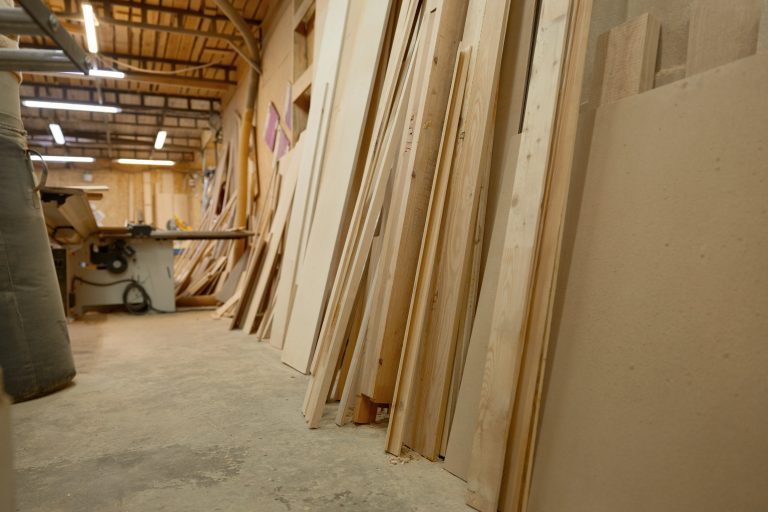
Try this instead:Use vertical storage whenever you can:
A simple rack or dividers against the wall for longer pieces.
Bins or crates on shelves for smaller bits.Keep them near the work that uses them:
If you mostly use scraps for jigs and spacers at the bench, keep those bins close to the bench.
If you use sheet offcuts mostly at the CNC, keep those near the machine.
The farther you have to walk and dig, the less likely you are to reuse anything.
And if nobody is using the offcuts, you’re just paying rent to store regret.
Even with good rules, offcuts will pile up again over time. That’s normal.
So give yourself permission to clear them on a schedule.
A simple rule:
Once a month, we “audit” the scrap area for 10–15 minutes.
During that time:Anything dusty, warped, or clearly untouched for months → out.Anything you keep has to pass your size and quality rules again.If a bin can’t hold any more, you don’t add a new bin. You decide what leaves.
This stops you from having the same argument every week:
“Should we keep this?”
“I don’t know, maybe.”
Once the “audit” is part of the routine, it stops feeling like a personal decision and starts feeling like just another part of running the shop.
Offcuts get used more when they’re part of the plan, not just a lucky accident.
A few easy habits:Default to scraps for jigs, test cuts, and spacers.
Before you cut into fresh stock, check the scrap bin for something that works.
Design certain shop projects around scraps.
Shop cabinets, clamp racks, small organizers—these are great places to use decent offcuts.
Keep a simple list of “scrap-friendly” jobs.
Little trays, sample blocks, small shelves, things you can batch when the scrap bin is full.
You don’t need a full product line out of scraps. Just a few go-to ideas so that when you see a pile, you know where that material can go.
Offcuts live in the physical shop, but the decision to use them is mental.
That’s where a tool like Woodshop Master can quietly help:When you’re planning a job, you can make a quick note in the system:
“Use scrap for cleats,”
“Check scrap rack for drawer bottoms,”
“Use offcuts for test cuts / jigs.”You can see at a glance which jobs are good candidates for using leftovers and which ones truly need full fresh stock.You can also add simple reminders like “scrap rack is full, schedule a scrap day,” so it doesn’t depend on someone remembering at the worst moment.
Woodshop Master won’t magically sort your wood for you.
But it will help you turn offcuts from a messy “someday pile” into a deliberate part of how your shop plans work and saves money.

